
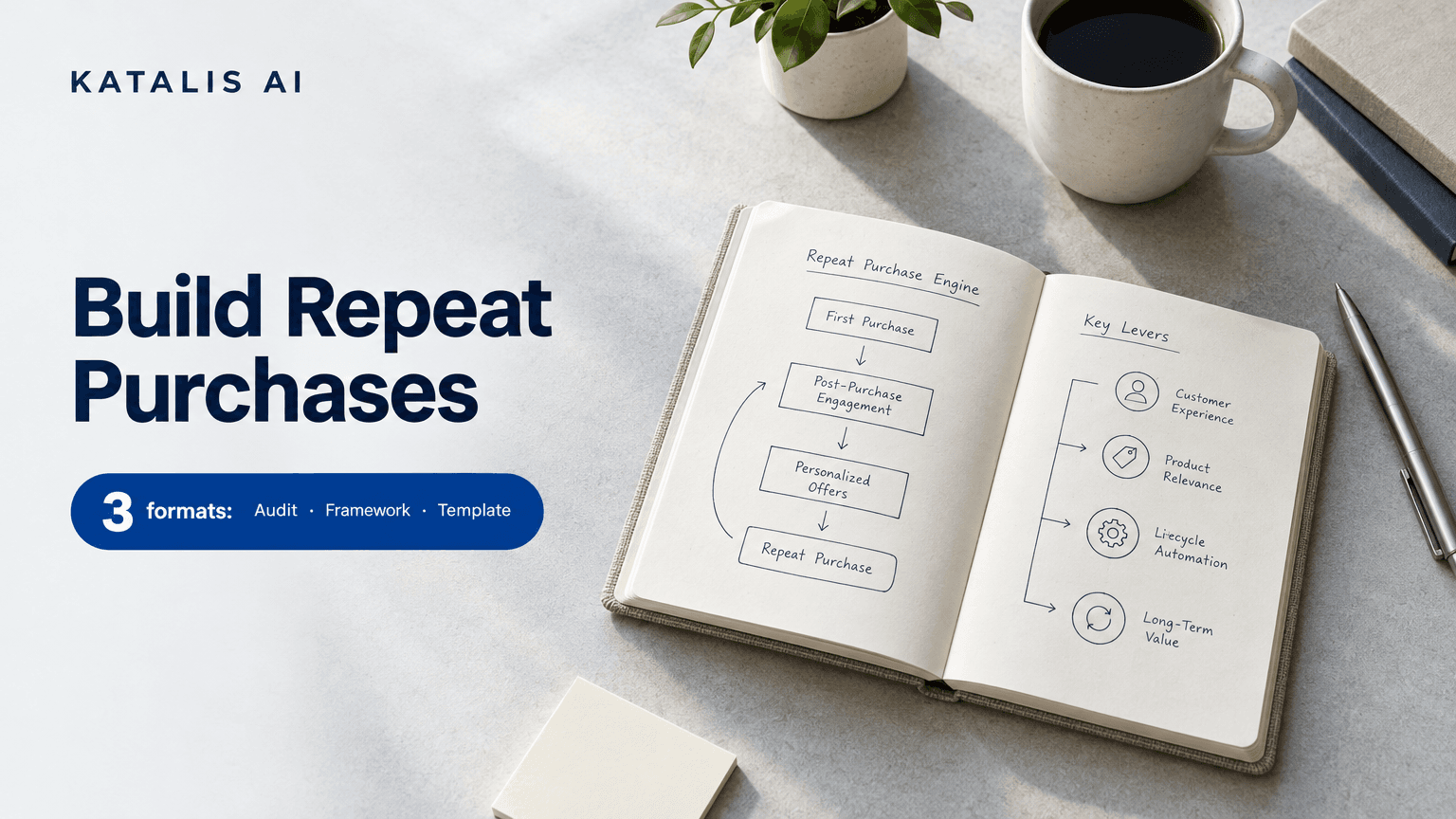
An e-commerce repeat purchase engine is a structured system of post-purchase touchpoints, cohort analytics, and replenishment triggers designed to systematically drive predictable second orders. By securing subsequent purchases without recurring paid media spend, brands elevate contribution margins and stabilize blended customer acquisition costs across the customer lifecycle.
Key Takeaways
- Contribution margin improves dramatically on the second order because initial customer acquisition cost (CAC) has already been absorbed.
- Second-order velocity determines retention durability; the faster a first-time buyer converts again, the higher their lifetime gross profit.
- Cohort analysis based on replenishment cycles reveals optimal reorder windows and prevents margin-diluting discount dependencies.
- Engineering zero-paid reorder paths reduces blended CAC and shields direct-to-consumer businesses from media inflation.
The Shift from Top-of-Funnel Volume to Contribution Margin
E-commerce growth has historically prioritized top-of-funnel customer acquisition volume. However, rising paid media costs across major ad platforms have compressed first-order unit economics. For many brands, first-time orders generate break-even or negative contribution margin once ad spend, fulfillment, payment processing, and cost of goods sold (COGS) are deducted.
Sustainable profitability requires shifting the core operational focus from gross revenue to contribution margin after marketing. A repeat purchase engine treats the first transaction as an investment and systematically engineers the follow-up orders where true contribution margin is realized.
Step 1: Auditing the Customer Lifecycle for High-Margin Repeat Windows
Before launching retention campaigns, brands must identify when customers naturally consume or exhaust their initial purchase. Deploying retention messages too early annoys customers, while waiting too long allows churn to competitor alternatives.
To audit these windows accurately, isolate customer cohorts by initial product purchased and analyze the distribution of days between the first and second transaction:
- Calculate the Median Time to Second Order: Map the latency curve for each primary Stock Keeping Unit (SKU) to determine the exact inflection point where reorder probability drops off.
- Evaluate Margin by Entry SKU: Not all first purchases are equal. Certain entry products drive high initial revenue but low second-order rates, while other SKUs cultivate habitual reorder behavior.
- Identify the Natural Replenishment Cycle: For consumable goods, determine typical daily usage rates to project when a package will reach 75% depletion.
Step 2: Designing Post-Purchase Touchpoints to Drive Second-Order Velocity
Second-order velocity measures how quickly a new buyer makes their second transaction. A compressed timeline between purchase one and purchase two directly correlates with higher long-term retention.
Post-purchase communication should focus on value delivery and consumption before pitching a new transaction. If a customer has not unboxed, understood, or consumed the product, a reorder promotion will fail.
Consider this hypothetical example: A consumer wellness brand sells a 30-day supplement supply. The automated sequence initiates delivery tracking, provides usage guidelines on day 3, sends a consumption check-in on day 14, and triggers an automated replenishment reminder on day 23. This timing ensures the replenishment prompt arrives just before the customer exhausts their supply, preventing gaps in usage.
Step 3: Integrating Retention Mechanics to Lower Blended Acquisition Costs
A functional repeat purchase engine lowers blended acquisition costs by capturing subsequent transactions through owned and non-paid distribution channels.
Key retention mechanics include:
- Predictive Replenishment Triggers: Automated email and SMS sequences triggered by product lifecycle data rather than arbitrary calendar dates.
- Dynamic Cross-Sell Logic: Recommending complementary products based on the entry SKU rather than broad store-wide bestsellers.
- Frictionless Reorder Experiences: Providing direct checkout links or one-click replenishment options that bypass standard multi-step shopping carts.
- Value-Led Loyalty Frameworks: Offering loyalty perks that reward repeat orders with functional benefits, such as priority shipping or exclusive access, rather than margin-draining sitewide percentage discounts.
Step 4: Monitoring and Optimizing for Long-Term Margin Health
Evaluating repeat engine health requires monitoring metrics that reflect net operational profit rather than cosmetic engagement rates. Teams should track:
- Contribution Margin per Cohort: Gross profit minus direct variable costs, shipping, pick-and-pack, and dedicated retention marketing spend.
- Second-Order Repeat Rate: The percentage of first-time buyers who return for a second purchase within a specified timeframe, such as 60 or 90 days.
- Blended CAC Ratio: Total marketing expenditure divided by total customers acquired and retained across all channels.
Practical Repeat Engine Implementation Checklist
- Audit past 12-month cohort data to identify the median days to second purchase per entry SKU.
- Tag customers based on the specific category or product problem solved in their first order.
- Build automated post-purchase onboarding workflows that encourage initial product consumption.
- Establish automated replenishment prompts timed to 70-80% of product depletion.
- Review monthly contribution margin by cohort to confirm that retention revenue is not dependent on aggressive discount codes.
Frequently Asked Questions
Why is the second order critical for contribution margins?
The first order absorbs customer acquisition costs such as paid media bidding and creative production. When a customer orders a second time through owned channels, those media acquisition costs are removed, leaving only variable fulfillment and COGS. This dynamic substantially increases the net contribution margin of the order.
What is a realistic benchmark for second-order repeat rates?
Benchmark rates vary widely based on product category, consumption cycle, and pricing tier. Consumable goods naturally support higher repeat rates than durable goods. Rather than relying on generic industry averages, brands should establish a baseline from their own historical cohort data and aim for sequential quarterly improvements.
How can brands encourage repeat purchases without discounting?
Brands can drive repeat orders by emphasizing convenience, personalized cross-sells, automated replenishment reminders, educational content that maximizes product value, and exclusive customer perks such as early access to new releases or dedicated support.
Admin One