
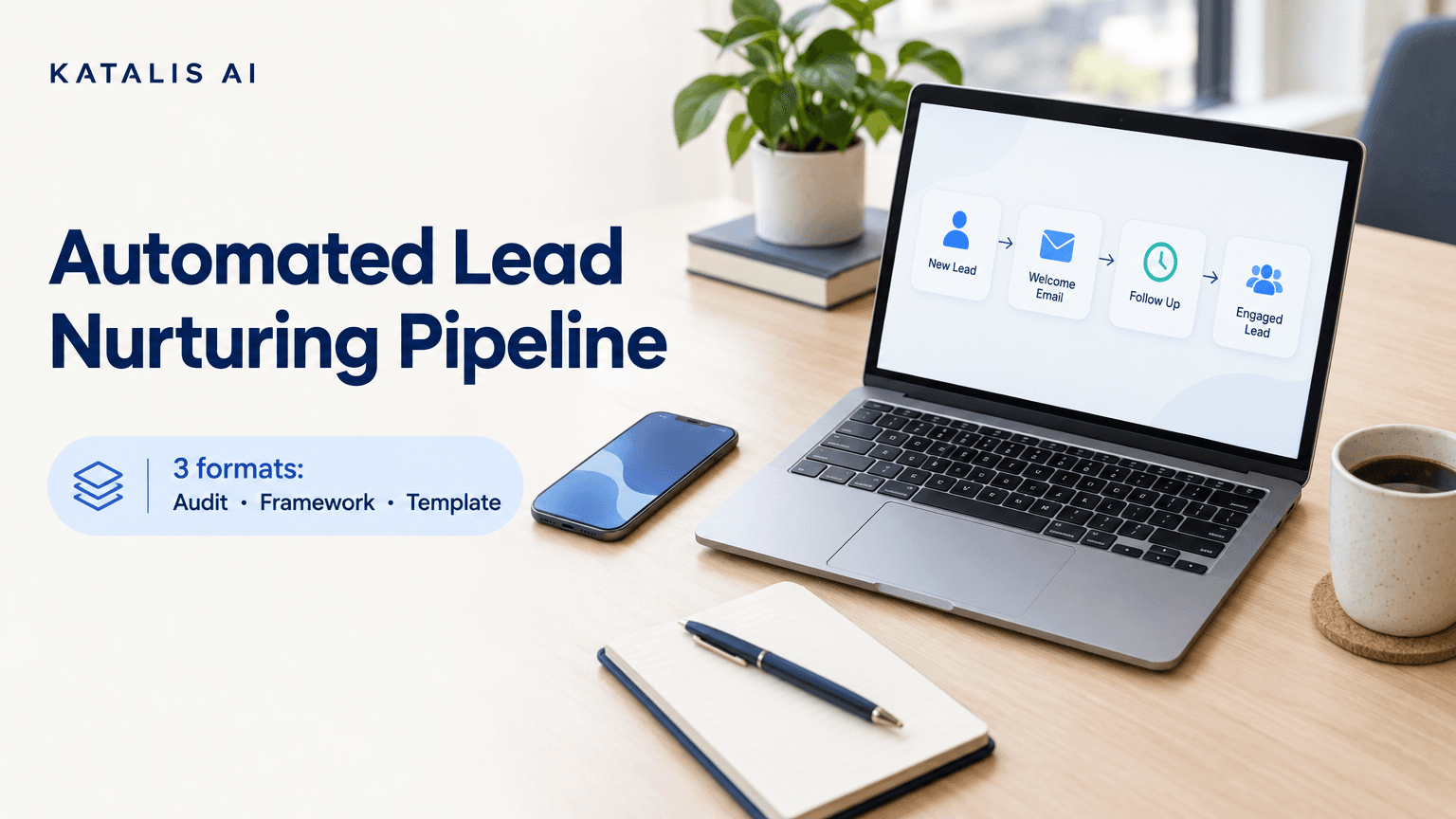
An automated lead nurturing pipeline for service providers systematically captures inbound inquiries, routes them through triggered communication sequences, and qualifies prospects before scheduling a consultation. Automating this sequence reduces response latency, prevents drop-offs, and ensures high-intent prospects receive rapid, structured follow-up across email and direct messaging channels.
Key Takeaways
- Inbound service inquiries lose momentum quickly when initial response times exceed minutes rather than hours.
- Effective nurturing requires mapping lead capture points directly to distinct intent tiers, from general information seekers to consultation-ready buyers.
- Multi-channel workflows combining email with direct messaging platforms like WhatsApp increase engagement across modern service markets.
- Strict qualification gates prevent sales teams from expending consultation hours on unvetted prospects.
Methodology and Framework Overview
This operational framework outlines the architecture required to handle high-intent inbound inquiries. Developed as a foundational blueprint for professional service providers, agency teams, and clinical operators, it balances automated responsiveness with rigorous lead filtering to maintain pipeline velocity without compromising consultation quality.
Phase 1: Mapping Inbound Inquiry Touchpoints and Intent Stages
Service lead generation often attracts a wide variance of intent. A visitor requesting an instant price quote is operating with different urgency than a prospect downloading an informational whitepaper. Before configuring automation tools, operators must categorize entry points into specific intent stages:
- Top-of-Funnel (Informational): Captured via resource downloads, newsletter subscriptions, or broad educational forms. These leads require educational context and capability demonstrations before any direct sales pitch.
- Middle-of-Funnel (Evaluative): Sourced from service scope comparisons, webinar registrations, or pricing page visits. These prospects understand their problem and are comparing service models.
- Bottom-of-Funnel (Commercial): Inquiries originating from direct contact forms, audit booking requests, or direct inbound messages. These prospects require immediate commercial qualification and scheduling availability.
Mapping each capture form to one of these three tiers ensures that downstream messaging aligns with the prospect's actual readiness to purchase.
Phase 2: Establishing Channel-Specific Response Protocols
Relying exclusively on email follow-up creates avoidable attrition, particularly in markets where mobile direct messaging is standard practice. A resilient pipeline establishes automated responses tailored to the channel where the inquiry originated.
For form-based submissions on your website, send an automated confirmation email within two minutes. This message should confirm receipt, establish explicit turnaround expectations, and provide direct self-service booking links for bottom-of-funnel prospects.
For direct messaging channels, such as WhatsApp or conversational chat widgets, immediate acknowledgment is critical. Automated auto-responders should acknowledge the inquiry, capture basic operational details such as company name, service category, or project timeline, and assign the ticket to an active representative.
Phase 3: Defining Automation Triggers for Follow-Up Cadences
Inbound service nurturing requires event-driven cadence triggers rather than simple time-based delays. If a prospect interacts with a specific proposal or pricing overview, the pipeline must adjust its sequence dynamically.
A practical multi-touch sequence for evaluative service inquiries includes:
- Day 0 (Immediate): Instant acknowledgment with context-specific collateral or calendar availability.
- Day 2 (Value Reinforcement): Automated delivery of a relevant case study or technical implementation breakdown demonstrating verified service outcomes.
- Day 4 (Process Clarification): An operational summary explaining what an onboarding or discovery consultation entails, removing friction for hesitant prospects.
- Day 7 (Direct Check-in): A brief, plain-text outreach asking if the prospect is still actively seeking a solution this quarter.
Each interaction should include clear exit conditions. If a lead schedules an introductory call, all promotional nurturing sequences must cease immediately to prevent duplicate messaging.
Phase 4: Creating Qualification Criteria Before Sales Hand-Off
High inquiry volume does not equal pipeline health if sales consultants spend time meeting unqualified contacts. The automated sequence must enforce qualification parameters before a calendar booking link is activated.
Implement automated intake fields or short multi-step forms that evaluate:
- Budget Alignment: Confirm whether the prospect meets minimum retainer or project thresholds.
- Authority and Scope: Identify whether the contact is a decision-maker or an intermediary gathering preliminary pricing.
- Timeline Requirements: Determine if the delivery timeline matches your operational capacity.
Prospects meeting these criteria receive automated calendar routing to senior consultants. Unqualified or low-budget inquiries should be programmatically routed to self-service resources, partner directories, or low-tier digital products.
Phase 5: Monitoring Pipeline Bottlenecks and Response Latency
An automated pipeline requires continual optimization against core operational metrics. Track these primary indicators to evaluate system efficiency:
- First Response Time (FRT): The elapsed time between inquiry submission and the automated delivery of the first confirmation touchpoint.
- Qualification Rate: The percentage of raw inbound leads that satisfy your firm's baseline qualification criteria.
- Booking Conversion Rate: The proportion of qualified prospects who complete a consultation booking. As an estimated operational benchmark, service firms typically aim for 20% to 35% of qualified inbound leads to transition into a scheduled call, though actual figures depend on industry vertical and price point.
- Pipeline Slippage: Contacts who stall between initial inquiry and booking, signaling where messaging or form friction must be resolved.
Operational Checklist for Pipeline Deployment
- Audit all website forms, chat tools, and messaging hooks to verify data flows into your central CRM without manual data entry.
- Configure channel-specific templates for email, SMS, and regional direct messaging channels.
- Implement conditional logic to silence marketing sequences the moment a lead completes a booking.
- Review qualification intake questions quarterly to ensure sales teams receive viable opportunities.
Frequently Asked Questions
What tools are required to build an automated lead nurturing pipeline?
At minimum, service providers require an integrated customer relationship management (CRM) platform, marketing automation software capable of webhook triggers, and an automated scheduling tool. For businesses operating in messaging-first markets, integrating a business API for WhatsApp or direct messaging is also necessary.
How quickly should an automated follow-up trigger?
Initial automated confirmations should trigger within two minutes of submission. For commercial inquiries, subsequent routing to human sales reps should occur within one hour during standard business operations to maximize conversion potential.
How can small service teams avoid sounding robotic in automated emails?
Use concise, plain-text formats rather than heavily designed marketing templates. Writing in direct, first-person language focused on answering specific client questions makes automated outreach feel personal and professional.